2026-06-18
Is cost delaying the take-off of sustainable aviation fuel (SAF)?
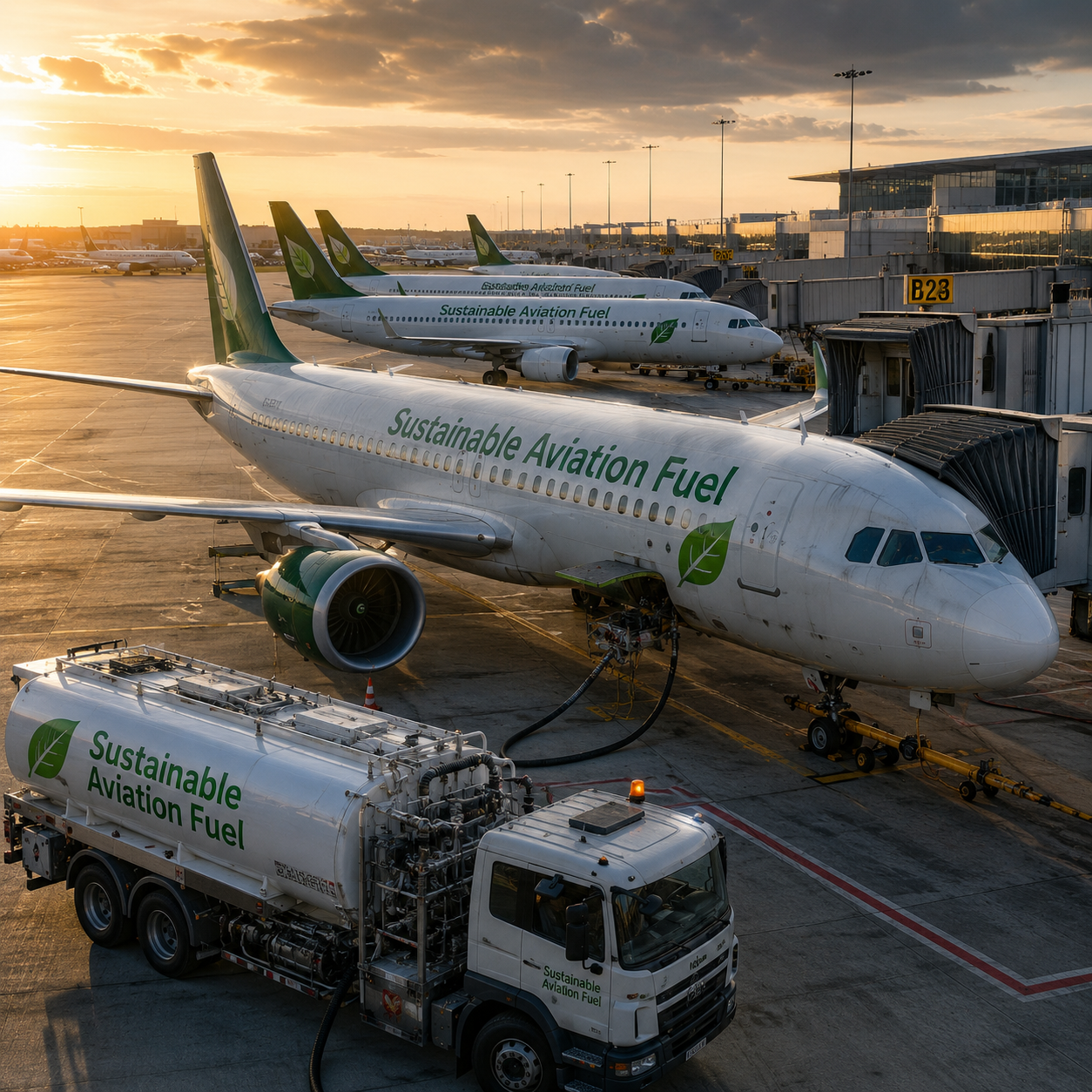
Sustainable aviation fuel (SAF) offers the opportunity to reduce our dependence on imported fossil fuels, with the price volatility and the economic impact that brings, while at the same time reducing carbon emissions from air travel. Unlike conventional jet fuel, SAF can be made from more locally available feedstocks such as forestry and agricultural residues.
Yet despite the obvious benefits, SAF still represents only a tiny fraction of global aviation fuel use and the biggest obstacle to adoption is cost. As SAF is more expensive than conventional jet fuel, airlines are concerned that it will lead to higher ticket prices.
Some airlines are now challenging the government mandates that require jet fuel to contain an increasing proportion of SAF – currently over 3% in the UK and rising to 10% in 2030.
Yet herein lies the irony. The SAF mandates will boost demand and help encourage investment in new plants – and it is only by scaling up production that we can significantly improve efficiency and bring down costs. Without doing so, prices will remain higher, supplies will be limited and nations will be trapped in the oil shock doom loop.
Clearly the price of SAF is a barrier. But how much more expensive is it than fossil-based fuel, to what extent would it affect ticket prices and how could we bring down the cost? We will look at each of these in turn.
How much does SAF cost and how does that compare to jet fuel?
The cost of SAF depends on the production method and feedstock used to make it. There are three price bands:
- HEFA SAF is made from used cooking oil and waste fats and accounts for all of the SAF used today. It is also the cheapest and was approximately three times the price of jet fuel before the Iran conflict – although as the price of jet fuel rose, the gap narrowed. However with waste oils and fats in limited supply, this type of SAF can not meet growing demand – building a SAF industry will require the use of other feedstocks and processes.
- SAF from waste biomass – the type produced by various conversion technologies including the Nova Pangaea process – is the next most expensive, at more than four times the price of jet fuel price before the conflict. While the technology is largely tried and tested, there are few plants as yet up and running so production is an early stage.
- Electro-SAF or e-SAF uses green hydrogen and captured carbon dioxide and is even more costly – it would cost more than ten times the pre-conflict price of jet fuel. This type of technology is still developing so bringing it into mass production will take some time.
Typically jet fuel accounts for around 25% of the cost of a flight. The impact of SAF on ticket prices will depend on the type of SAF and the proportion used. However to get some idea, consider the following scenario involving a £100 airline ticket where SAF is three times the cost of fossil fuel.
10% SAF: Of our £100 airline ticket, £25 represents the cost of fuel. If the airline was to replace 10% of jet fuel with SAF (the level required in 2030 under the UK rules) that would add an extra £5 to the cost of the ticket, compared with using fossil fuel alone. The ticket would cost £105.
100% SAF: If the flight was to be powered entirely using SAF (though this isn’t yet allowed under current fuel standards), fuel costs would approx triple to £75, which would increase the ticket price by £50. The ticket would cost £150.
So by using SAF, ticket prices would rise, but perhaps not to the extent that the public debate might suggest.
The 3 things that haven’t been factored in
However there are a number of factors that these price comparisons fail to take into account.
Firstly, the price of jet fuel is volatile and could rise again, with demand for air travel growing and supply chain disruptions becoming ever more frequent.
Carbon taxes imposed to reflect the cost of emissions will also effectively increase the price of fossil fuels, and so over time the price gap with SAF should narrow.
Secondly, SAF production facilities are still small compared with traditional oil refineries and do not have the economies of scale or mature supply chains that have been fine-tuned over decades in the oil industry, though this will change.
Finally, at present the price of SAF is artificially high in some cases as in practice it is linked to the price of fossil fuels, even though it is from a completely different source. Tackling these last two factors will help bring down the cost of SAF and make it a more viable option .
Bringing down the cost 1: scaling production
The most powerful way to cut costs is to scale up production. Larger plants and feedstock supply chains create economies of scale and result in greater efficiency as processes improve.
Nearly every new energy technology becomes cheaper over time – solar panels, wind turbines and batteries for example – and SAF could be expected to head in a similar direction.
Building an efficient supply chain is also important. Feedstock supplies may be patchy at the start but that will change as producers become aware of this new source of revenue and coordinate collections.
For example waste biomass largely comes from pulp and sawmills at present but there is huge potential to work with farmers, set up ‘milk rounds’ to collect crop stubble and build an agricultural supply chain. The same applies to capturing waste CO2 for e-SAF.
As demand for SAF increases, the risk is that it will drive up feedstock prices. Expanding the supply and using different feedstocks will help to keep costs down so it is important we pursue all the available SAF production technologies.
Bringing down the cost 2: decoupling prices from jet fuel
Before the Iran crisis started at the end of February 2026, jet fuel was around $750/tonne while SAF was generally over $2,000/tonne – almost three times the price. Within a matter of weeks jet fuel doubled in price to more than $1,500/tonne. In theory this should have significantly narrowed the gap, but in reality something very different happened. SAF prices rose to around £2,750/tonne – just under twice the price of fossil fuel.
Most SAF is supplied on one-year contracts and the price is tied to the cost of fossil fuels because it is a formula that buyers understand. Therefore as jet fuel rises, so do SAF prices – even though the cost of producing it is unchanged. In the short term, higher prices may be a bonus for SAF producers but in the longer term it makes SAF less competitive.
As new SAF production facilities come on stream, we have the opportunity to re-think SAF pricing structures and move to a different, less volatile system to encourage wider uptake.
Amidst global instability, energy supply chains are being weaponised and fossil fuels are no longer the cheap and reliable energy source they once were. Meanwhile oil price volatility is disrupting economic stability while carbon emissions are fuelling climate change. SAF represents a genuine alternative, albeit price is a barrier.
It’s time to take the long view. We need to encourage investment in new plants while at the same time doing all we can to reduce costs to help this fledging industry take off.